Navigating the world of premium B2B services isn’t just about business… it’s an art. Let me get you branded and positioned for maximum revenue and profit!
Click on the big red button above to schedule a one-hour branding and positioning super session, or click on the red + icons below to learn how my packages will help you.
Business Book Titles

I will create catchy, “buy me now” titles for your business book! Make a lasting first impression with your book title! Let me transform your book’s name into an unforgettable introduction.
In a world flooded with publications, a captivating title is key to standing out. My service offers more than just catchy titles; I create memorable, provocative, and timeless names that resonate with your target audience. Expect simplicity yet brilliance, a title that’s easy to remember and spell, yet profound in its message.
Your book’s title is its first handshake with readers. Let’s make it count:
· Memorable: Stays with readers long after the first glance.
· Provocative: Dares to be bold and challenge norms.
· Simple: Easy to pronounce and spell, but deeply impactful.
· Timeless: Remains fresh, appealing and inspiring through time.
· Quintessential: Reflects the soul of your story in a few words.
Give your book the identity it deserves. Let’s craft the perfect title to elevate your story and set it on the path to becoming a potential bestseller. Upon request, gold package buyers can get a Zoom “Super Session” that normally costs $515 included at no extra charge! This is huge and clients say it’s worth thousands!
Business Book Titles:
I will create catchy, “buy me now” titles for your business book!
Bronze
3 Titles
Delivery: 3 days
1 Revision
Competitive analysis
Zoom Session
Investment: $99
Silver
5 Titles
Delivery: 3 days
1 Revision
Competitive analysis
Zoom Session
Investment: $125
Gold
5 Titles
Delivery: 4 days
2 Revisions
Competitive analysis
Zoom Session
Investment: $499
Let’s begin our journey. Your complete satisfaction is 100% guaranteed.
Business Names

Get a catchy, memorable, and unique name for your business venture in just days! Simply answer a few questions about your business, and I’ll handle the rest, crafting a name that’s not just a label but your brand’s first impression, encapsulating your identity and values.
In this package, I conduct research to deliver names that are memorable and represent your brand’s ethos. The right name is your signature in the market, an unforgettable melody to your customers.
As a seasoned naming strategist, I aim to create enduring names that are:
· Distinctive: Set your brand apart in a crowded market.
· Memorable: Resonate with customers and stick in their minds.
· Representative: Reflect your brand’s identity and values.
This package has options for domain availability checks, basic US & EU trademark searches, and competitor research. Upon request, gold package buyers can get a one-hour Zoom “Super Session” that normally costs $515 included at no extra charge! This is huge and clients say it’s worth thousands!.
Business Names:
I will create unique, catchy, memorable name ideas for your business!
Bronze
3 Names
Delivery: 3 days
1 Revision
Domain research
Trademark✓
Competitive analysis
Zoom Session
Investment: $99
Silver
3 Names
Domain research
Trademark✓
Delivery: 4 days
1 Revision
Competitive analysis
Zoom Session
Investment: $249
Gold
5 Names
Domain research
Trademark✓
Competitive analysis
Delivery: 6 days
1 Revision
Zoom Session
Investment: $499
Ready to make your brand unforgettable? Let’s craft the perfect name for your business. Your complete satisfaction is 100% guaranteed.
Business Product & Service Names
Get a unique, catchy, memorable, distinctive, clever name for your business product or service in just days! Simply answer a few questions about your business, and I’ll handle the rest, crafting a name that’s not just a label but a magnetic moniker that will resonate with your target audience and motivate them to learn more and buy.
In this package, I conduct research and use my 25+ years of marketing experience to create enduring names that are:
· Unique: original, unconventional, innovative, unparalleled, singular
· Catchy: engaging, appealing, captivating, enticing, snappy
· Memorable: unforgettable, lasting, indelible, noteworthy, remarkable
· Distinctive: individual, characteristic, notable, identifiable, distinguished
· Clever: ingenious, smart, witty, astute, shrewd
This package has options for basic US & EU trademark searches and competitor research. Upon request, gold package buyers can get a one-hour Zoom “Super Session” that normally costs $515 included at no extra charge! This is huge and clients say it’s worth thousands!.
Business Product / Service Names:
I will create unique, catchy, memorable, distinctive, clever names for your business product or service!
Bronze
3 Names
Delivery: 3 days
1 Revision
Trademark✓
Competitive analysis
Zoom Session
Investment: $99
Silver
3 Names
Trademark✓
Delivery: 4 days
1 Revision
Competitive analysis
Zoom Session
Investment: $149
Gold
5 Names
Trademark✓
Competitive analysis
Delivery: 6 days
1 Revision
Zoom Session
Investment: $499
Ready to make your product or service name attract qualified buyers like a powerful magnet? Let’s craft the perfect name for your business. Your complete satisfaction is 100% guaranteed.
Slogans and Taglines

Struggling to capture your brand’s essence in a few words? I will create 5 catchy, memorable slogans or taglines to boost the appeal of your brand. I don’t just create mundane phrases; I weave words that resonate with your brand and leave a lasting impression.
In this package, I delve deep into the heart of your business, conjuring up slogans or taglines that are creative and memorable. With the right phrase, your brand stands out, speaking directly to your audience. I ensure each phrase is unique, catchy, and clear.
How it works:
· You Initiate: Order a package, share your vision.
· I Interact: I’ll ask questions to guide our creative direction.
· You Select: Choose the slogan or tagline that truly represents your brand.
This package has options for domain availability checks, basic US & EU trademark searches, and competitor research. Upon request, gold package buyers can get a one-hour Zoom “Super Session” that normally costs $515 included at no extra charge! This is huge and clients say it’s worth thousands!
Slogans and Taglines:
I will create catchy, memorable slogans and/or taglines to boost the appeal of your brand!
Bronze
3 Slogans or 3 Taglines
Delivery: 3 days
1 Revision
Competitive analysis
Zoom Session
Investment: $99
Silver
3 Slogans + 3 Taglines
Delivery: 4 days
1 Revision
Competitive analysis
Zoom Session
Investment: $149
Gold
4 Slogans + 4 Taglines
Delivery: 5 days
1 Revision
Competitive analysis
Zoom Session
Investment: $499
Join me to make your brand unforgettable. Together, we’ll find the perfect embodiment of your business spirit.Your complete satisfaction is 100% guaranteed.
Mission, Vision & Brand Statements
With 25+ years in strategic branding, I specialize in creating mission, vision and brand narrative statements that define and elevate your brand. Whether you’re launching or revamping, I’ll help you stand out in the marketplace.
Your brand’s essence lies in its vision and mission – more than words, they are your identity’s heartbeat. Let’s craft statements that:
· Define your unique identity
· Express core beliefs
· Set ambitious, realistic goals
· Inspire clients and your team
· Clarify your purpose
· Guide you to success
· Build an authentic, resonating brand
Envision a brand that represents, inspires, and influences, proudly embodying your values. Ready to make a lasting impact? Partner with me to create a brand that’s genuinely yours and set the foundation for a lasting legacy. Upon request, gold package buyers can get a Zoom “Super Session” that normally costs $515 included at no extra charge! This is huge and clients say it’s worth thousands!.
Mission, Vision & Brand Statements:
I will create an original mission statement, vision statement and brand narrative to define your brand!
Bronze
Mission Statement
Delivery: 3 days
1 Revision
Vision Statement
Brand Narrative
Zoom Session
Investment: $99
Silver
Mission Statement + Vision Statement
Delivery: 3 days
2 Revisions
Brand Narrative
Zoom Session
Investment: $149
Gold
Mission Statement + Vision Statement + Brand Narrative
Delivery: 4 days
2 Revisions
Zoom Session
Investment: $499
Let’s start crafting your brand’s future. Your complete satisfaction is 100% guaranteed.
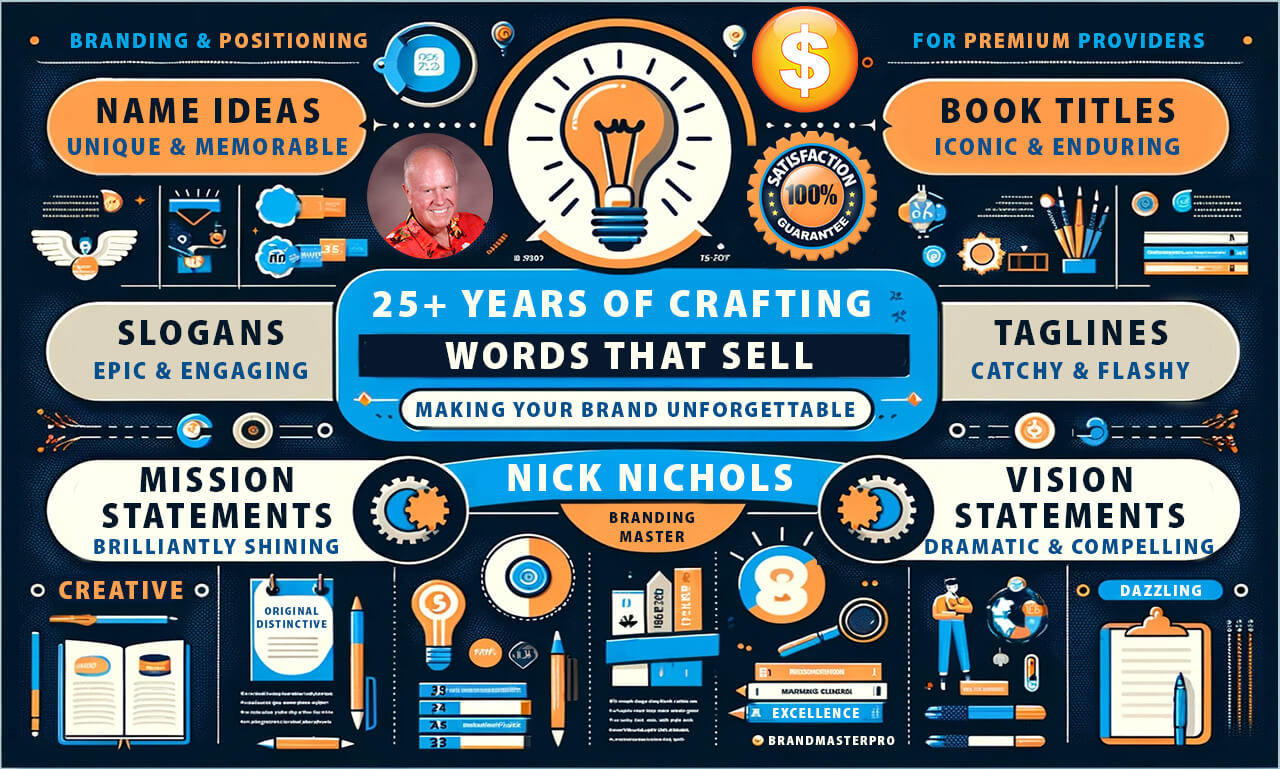
Nick has been unlocking Hidden and Underused Marketing Assets, for over 25 years. Yes, you heard that right.
From B2B consultants and service providers, to SaaS and tech companies, to even restaurants seeking business catering opportunities, Nick has had the pleasure of guiding premium professionals to maximize their potential without added costs. How? Primarily by leveraging what they already have, and then finding new ways to attract, engage, and turn prospects, into long-term, high-fee, clients!
As an author of over a dozen influential marketing books, a persuasive copywriter, a voice artist, and a Certified Camtasia Studio Video Producer, Nick understands the multifaceted world of B2B branding.
Speaking in front of audiences, big and small, as a Distinguished Toastmaster has taught Nick one thing: every message must resonate, and every speech must be actionable.
But here’s Nick’s secret sauce USPology® (USP-ology)
As the world’s only USPologist™, Nick crafts Dynamic Unique Selling Propositions that truly connect, turning mere prospects into committed buyers.
From orchestrating joint ventures to meticulously guiding the design of high-performing websites, Nick wears many hats but at his core, he is a passionate teacher, a committed problem-solver, and above all, your dedicated guide in the intricate world of marketing premium B2B services.
If you’re ready to elevate your brand with strategies based on real-world expertise, let’s journey together. Book a one-hour branding and positioning Zoom “Super Session” now.